Protection of Sovereignty Bill, 2026


The Story Behind the Bill
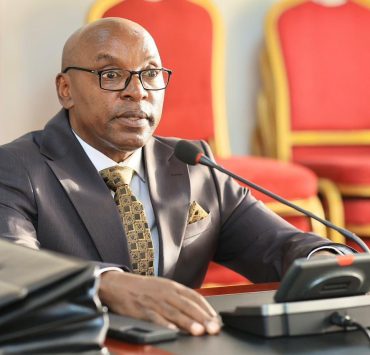
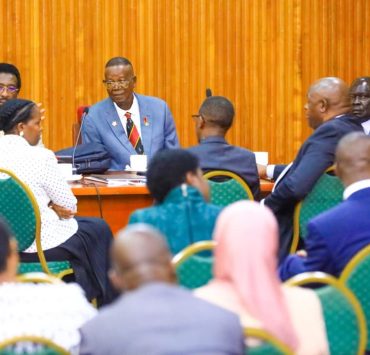
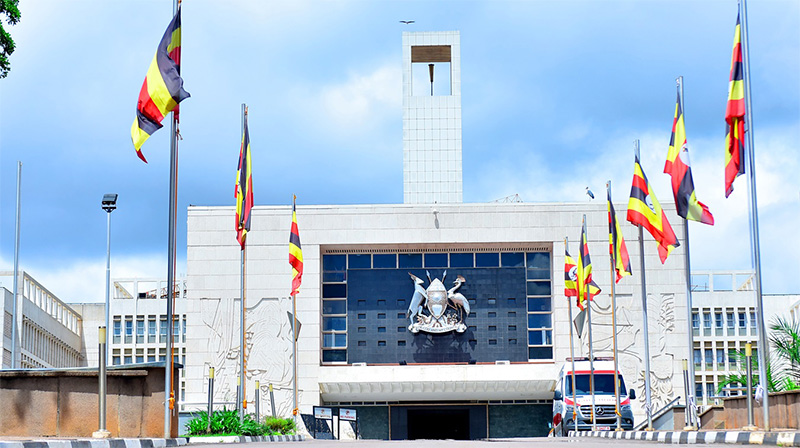
On 15 April 2026, a document arrived on the floor of Uganda’s Parliament that would spark intense national debate. Tabled by the state minister of Internal Affairs, Gen. David Muhoozi, and received its first reading on April 15, 2026, the Protection of Sovereignty Bill, 2026, is a proposed law that its architects describe as a shield for Uganda’s independence, a mechanism to ensure that foreign money and foreign interests do not quietly dictate the direction of the country. On the surface, it is a goal that few would argue against. Uganda, like every sovereign nation, has a right and a duty to protect its own interests.
But sovereignty is not a simple concept. Uganda’s sovereignty was formally restored on 9 October 1962, when the country gained independence from British colonial rule after decades of foreign domination. Since then, successive governments have wrestled with the tension between opening the country to international partnerships and protecting the integrity of domestic governance. Article 1 of Uganda’s 1995 Constitution is unambiguous: all power belongs to the people of Uganda, and they shall exercise that sovereignty in accordance with the Constitution. The document you are reading is an attempt to help ordinary Ugandans understand what this new Bill proposes, and whether it lives up to that constitutional promise.
| “All power belongs to the people of Uganda, and they shall exercise their sovereignty in accordance with this Constitution.” — Article 1, Constitution of Uganda, 1995 |
The context for this Bill matters. Uganda operates within a complex web of development partnerships, civil society organisations, faith-based institutions, international media, and diaspora communities spread across the globe. Foreign funding flows into the country through thousands of channels from United Nations agencies supporting health programmes, to churches receiving tithes from congregations in London and Houston, to universities conducting joint research with European institutions. Most of this funding supports legitimate activities that benefit ordinary Ugandans. The question the Bill raises and that Parliament must now answer is where the line between legitimate regulation and unconstitutional overreach truly lies.
What the Bill Actually Proposes
The Protection of Sovereignty Bill is a dense legal document spanning dozens of clauses. But at its core, it rests on six major pillars that together define a new regulatory framework for foreign involvement in Uganda’s civic and economic life. Each of these provisions has direct practical implications for individuals and organisations operating in Uganda today.
Registration of Agents of Foreigners (Clauses 14–17)
The Bill introduces a mandatory registration system for any person who acts on behalf of a foreigner, broadly defined to include foreign governments, corporations, organisations, and even Ugandan citizens living outside the country. Under Clauses 14 to 17, such a person must register with the Department responsible for peace and security within the Ministry of Internal Affairs, and must obtain a certificate authorised by the Minister personally.
These certificates are not permanent. They expire after two years and must be renewed. The renewal process is described in the Bill as a “suitability inquiry,” which may include assessments of the applicant’s mental and physical health, a provision that legal analysts have flagged as unusually intrusive and potentially open to abuse. The punishment for operating without registration is severe: a fine of up to UGX 1 billion, imprisonment of up to 10 years, or both.
| Clauses 14–17 Registration
Every foreign agent of a foreigner must register with the Ministry of Internal Affairs and obtain a Ministerial certificate, renewable every 2 years. The process includes suitability checks covering mental and physical health. Penalty: Fine of up to UGX 1 billion, imprisonment of up to 10 years, or both. |
The Foreign Funding Cap (Clause 22)
Perhaps the most far-reaching financial provision in the Bill is found in Clause 22, which places a hard ceiling on the amount of foreign financial support that any individual or organisation may receive in a given year. The cap is set at UGX 400 million, equivalent to 20,000 currency points, within any 12 months. Any amount above this threshold requires prior written approval from the Minister of Internal Affairs.
This is not simply a reporting requirement. If funds are received in contravention of this cap, that is, without Ministerial approval, those funds are subject to forfeiture to the State. For many organisations, including medium-sized NGOs, research institutions, and development agencies, annual foreign funding routinely exceeds UGX 400 million. For them, the Bill would require constant Ministerial engagement and approval, introducing significant bureaucratic delays and institutional uncertainty.
| Clause 22 Foreign Funding Cap
No person or agent of a foreigner may receive more than UGX 400 million in foreign financial support in any 12 months without prior written Ministerial approval. Penalty: Excess funds forfeited to the State. |
Restrictions on Policy Activities (Clauses 7 and 8)
Clauses 7 and 8 of the Bill target what it describes as “policy activities,” a category that encompasses policy advocacy, influencing government policy, and carrying out activities related to government policy implementation. Under these provisions, any such activity requires Cabinet-level authorisation. This means that before a civil society organisation can advocate for a change in, say, healthcare policy or land rights legislation, it must first obtain approval from Uganda’s full Cabinet.
The consequences of non-compliance are extraordinary. Developing a policy without Cabinet approval is classified as a criminal offence carrying a maximum sentence of 20 years’ imprisonment. Legal experts have described this provision as one of the most severe restrictions on civic participation ever proposed in Ugandan law. It would effectively require civil society organisations, think tanks, academic institutions, and advocacy groups to seek government permission before engaging in the very activities that define their purpose.
| Clauses 7 & 8 Policy Activities
Policy advocacy, influencing government policy, and activities related to government policy implementation all require Cabinet-level authorisation before they can be carried out. Penalty: Up to 20 years’ imprisonment for developing policy without Cabinet approval. |
The Economic Sabotage Offence (Clause 13)
Clause 13 creates a sweeping new criminal offence: “economic sabotage.” Under this provision, publishing information or participating in any activity that weakens or damages the economic system or viability of Uganda, causing economic disruption, insecurity, or instability, is a criminal act. The offence is deliberately broad, and the Bill does not provide precise definitions of what constitutes “disruption,” “insecurity,” or “instability.”
This vagueness is alarming to media practitioners, academics, and economists. In practice, Clause 13 could be invoked against a journalist who reports on a banking crisis, an economist who publishes data on inflation trends, or a researcher who documents the impact of government policy on poverty rates. Any publication that could be construed as damaging to Uganda’s economic image, even if factually accurate, could, under a strict reading of this clause, be treated as a criminal act.
| Clause 13 Economic Sabotage
Publishing information or participating in any activity that weakens Uganda’s economic system or viability, causing disruption, insecurity, or instability, is a criminal offence. Penalty: Criminal prosecution. No maximum sentence specified in available text. |
Funding Disclosure Requirements (Clause 21)
Clause 21 introduces a mandatory disclosure regime for all agents of foreigners who receive foreign funding. Every such individual or organisation must submit a declaration of the source of their funds to the Minister of Internal Affairs. Critically, these declarations are not treated as confidential government records. The Bill expressly provides that they are publicly available any member of the public may inspect them.
While transparency in funding can serve legitimate public interest goals, analysts have raised concerns about the implications of mandatory public disclosure for organisations operating in sensitive areas such as those supporting victims of domestic violence, working with LGBTQ+ communities, or documenting human rights violations. Public disclosure of funding sources could expose both the organisations and the individuals they serve to significant risks.
| Clause 21 Funding Disclosure
All foreign agents receiving foreign funding must submit declarations of funding sources to the Minister. These declarations are publicly available for inspection by any member of the public. Penalty: Non-declaration is treated as a violation subject to penalties under related clauses. |
Banking Restrictions (Clause 25)
The final major provision, Clause 25, closes a potential compliance gap by targeting financial institutions directly. Banks and other supervised financial institutions are prohibited from paying out any money to an agent of a foreigner unless that person or organisation can produce both a funding source declaration and proof of Ministerial authorisation. This effectively deputises Uganda’s banking sector as an enforcement mechanism for the Bill’s other provisions.
For financial institutions, the compliance burden is significant. Banks would need to verify the registration status and Ministerial approvals of clients before processing transactions. Institutions that fail to comply face civil penalties of UGX 4 billion a figure large enough to create strong institutional incentives for overcompliance, potentially leading banks to refuse transactions from any organisation with foreign connections as a matter of caution.
| Clause 25 Banking Restrictions
Banks and supervised financial institutions are prohibited from paying out money to an agent of a foreigner without a valid funding source declaration and proof of Ministerial authorisation. Penalty: Civil penalty of UGX 4 billion for non-compliant institutions. |
Who Does This Bill Affect?
One of the most striking aspects of the Protection of Sovereignty Bill is the breadth of its reach. Unlike legislation that targets a specific sector or activity, this Bill, if enacted in its present form, would touch virtually every part of Uganda’s economy and civil society. Understanding who is affected, and how, is essential to grasping the full significance of what is being proposed.
Non-Governmental Organisations and International NGOs
For Uganda’s large and active NGO sector, the Bill represents a fundamental transformation of the operating environment. Every member of staff or implementing partner who works on behalf of a foreign-funded organisation would need to register individually with the Ministry of Internal Affairs. Every grant exceeding UGX 400 million, which describes the majority of significant development grants, would require Ministerial pre-approval before funds could be received. The sources of all foreign funding would be publicly disclosed. And directors and officers of implementing organisations would face personal criminal liability for their organisations’ compliance failures.
This is not a minor administrative adjustment. For organisations running health clinics, supporting survivors of gender-based violence, or delivering education programmes in remote areas, the combination of registration requirements, funding caps, and Ministerial approvals would create months of bureaucratic delay at every stage of the project cycle. In a sector where programme continuity is directly linked to health and welfare outcomes, that delay has human costs.
Bilateral and Multilateral Development Agencies
A notable omission from the Bill is any exemption for entities operating under formal government-to-government development cooperation agreements. Bilateral agencies such as USAID, GIZ, DFID, and the like, as well as multilateral bodies like UNICEF, the World Bank, and the United Nations Development Programme, would be subject to the same Ministerial clearance requirements as private NGOs. For these agencies, which routinely disburse hundreds of millions of shillings to Ugandan implementing partners, this creates an unprecedented compliance burden and raises fundamental questions about Uganda’s commitments under its development cooperation agreements.
Private Companies with Foreign Links
The Bill’s definition of “agent of a foreigner” is broad enough to capture Ugandan employees and directors of foreign-incorporated or foreign-financed companies. In a globalised economy where significant portions of Uganda’s private sector involve foreign investment or partnership, this provision could expose a large number of ordinary working Ugandans to individual registration obligations and criminal liability simply by virtue of their employer’s ownership structure.
The Media and Press
For journalists and media organisations, Clause 13’s economic sabotage offence presents the most immediate threat. Economic and political reporting, investigative journalism, and the publication of any information that could be construed as damaging to Uganda’s economic system or viability would carry the risk of criminal prosecution. In a country where investigative journalism has historically played a vital role in exposing corruption and holding power to account, this provision could create a chilling effect on reporting, with journalists self-censoring for fear of prosecution even when reporting truthfully and in the public interest.
Academic and Research Institutions
Universities, think tanks, and independent research institutes that receive foreign funding and conduct policy research are directly exposed under Clauses 7 and 8. Policy research by its very nature involves analysing government policy and recommending alternatives. Under the Bill’s broad framing, such research could constitute “developing a policy” without Cabinet authorisation, exposing researchers to criminal liability. This would have profound implications for Uganda’s academic freedom and its ability to attract international research partnerships.
Faith-Based Organisations

Churches, mosques, and other religious bodies with international affiliations occupy a uniquely exposed position under this Bill. Diaspora remittances, tithes collected from foreign congregations, and donations from affiliated international bodies all qualify as foreign funding under the Bill’s definitions. For a country in which faith-based organisations deliver a significant proportion of social services, including healthcare, education, and support for vulnerable communities, this is not a peripheral concern. It goes to the heart of how Ugandan civil society is funded and organised.
Ugandans in the Diaspora and Their Families
Perhaps the most counterintuitive provision of the Bill is its treatment of Ugandan citizens living abroad. Under the Bill’s definitions, Ugandan nationals residing outside Uganda are classified as “foreigners.” This means that a Ugandan living in London or Nairobi who sends money home to support a community project, a civic organisation, or a family member engaged in political or organisational activities could inadvertently transform the recipient into an “agent of a foreigner” with all of the accompanying registration, disclosure, and liability obligations. The implications for Uganda’s significant diaspora community and for the families who depend on their remittances are profound.
Constitutional and Legal Concerns
Legal analysts, constitutional scholars, and civil society advocates have raised serious concerns about the Bill’s compatibility with Uganda’s 1995 Constitution and the country’s obligations under international law. These are not peripheral technical objections — they go to the heart of the Bill’s legitimacy and enforceability. Five major concerns have been identified.
| 01. The Offences Are Too Vague
A fundamental principle of criminal law enshrined in Article 28(12) of Uganda’s Constitution is that citizens must be able to understand, with reasonable clarity, what conduct is prohibited by law. The Constitutional Court and the Supreme Court of Uganda have repeatedly struck down criminal provisions that fail this test. Several of the Bill’s key offences, including “economic sabotage,” “policy development,” and “influencing government policy,” are defined so broadly and imprecisely that reasonable people could disagree fundamentally about what conduct falls within their scope. This vagueness does not merely create legal uncertainty; it creates the conditions for selective and politically motivated enforcement. |
| 02. Violations of Freedom of Expression, Association, and the Press
Article 29 of the Constitution guarantees Ugandans the right to freedom of speech, freedom of the press, and freedom of association. Article 43(c) provides that these rights may only be limited where such limitation is “acceptable and demonstrably justifiable in a free and democratic society.” The Bill’s sweeping restrictions on policy advocacy, economic publication, and civic engagement go far beyond what this standard permits. Requiring Cabinet authorisation before advocating for a policy change, or criminalising the publication of economic information, cannot plausibly be described as a justifiable limitation on fundamental freedoms in a democratic society. |
| 03. Undermining the Right to Civic Participation
Article 38 of the Constitution expressly guarantees every Ugandan citizen the right to participate in the governance of the country, either directly or through elected representatives. It also gives citizens the right to petition Parliament on matters of public concern. The Bill’s mandatory Cabinet authorisation for all policy-related activities, and its criminalisation of unsanctioned policy development systematically dismantle this constitutional right. An active, informed, and engaged citizenry is not a threat to sovereignty; it is its foundation. |
| 04. Threats to the Right to Property
Article 26 of the Constitution protects every Ugandan’s right to own property and guarantees that property shall not be compulsorily acquired without prompt and fair compensation. The forfeiture provisions under Clauses 22(3) and 23(2) of the Bill empower courts to confiscate foreign-sourced funds upon conviction — without requiring the prosecution to demonstrate that those funds caused any tangible harm to Uganda’s interests, and without providing adequate legal safeguards for the affected party. This goes beyond what Article 26 permits. |
| 05. Conflicts with International Treaty Obligations
Uganda is a signatory to numerous bilateral and multilateral development cooperation agreements, as well as the Vienna Convention on the Law of Treaties, which embodies the principle of pacta sunt servanda (agreement must be kept)— the obligation to honour treaty commitments in good faith. By failing to exempt entities operating under government-to-government agreements from its requirements, the Bill places Uganda in direct conflict with these obligations. This exposes Uganda to formal claims of treaty breach and could jeopardise or destroy its relationships with key development partners at a time when international financing is vital to the country’s development agenda. |
The Bigger Picture: Sovereignty, Rights, and Democracy
It is important to step back from the specific provisions of the Bill and consider the broader question it raises. Sovereignty is not merely the power of a state to act without external interference. In the modern constitutional tradition — the tradition Uganda embraced when it adopted its 1995 Constitution — sovereignty is inseparable from the rights and freedoms of the people in whose name it is exercised. A government that curtails its citizens’ freedoms in the name of protecting sovereignty is, in a meaningful sense, undermining the very sovereignty it claims to defend.
Uganda has a long and proud tradition of civil society engagement, independent journalism, and civic advocacy. These are not imports or foreign-funded luxuries. They are expressions of the same democratic instinct that drove the independence movement of the 1960s. The men and women who fought for Uganda’s sovereignty did not fight for the right of any single government to govern without scrutiny or accountability. They fought for the right of Ugandans all Ugandans to shape their own destiny.
| The question is not whether Uganda should protect its sovereignty. It unquestionably should. The real question is how to do so in a way that upholds constitutional freedoms, respects international obligations, and preserves the democratic principles upon which that sovereignty is founded. |
There is a legitimate debate to be had about the regulation of foreign funding in Uganda’s civil society. Some foreign-funded organisations have, at various points, pursued agendas that do not reflect Ugandan values or priorities. Transparency in funding is a reasonable public interest goal. Registration requirements, properly designed and proportionately enforced, can serve legitimate regulatory purposes. The concern raised by this analysis is not that Uganda should have no rules governing foreign funding; it is that the specific rules proposed in this Bill go far beyond what is necessary or constitutionally permissible.
What Uganda needs is legislation that is targeted, proportionate, and consistent with constitutional guarantees. It needs rules that distinguish between legitimate civic engagement and genuine foreign interference. It needs enforcement mechanisms that are transparent and accountable, not vague and prosecutorial. And it needs a legislative process that genuinely incorporates the voices of the citizens who will be most affected by whatever law eventually emerges.
That legislative process is still underway. The Bill is not yet law. Parliament has the opportunity and the constitutional responsibility to scrutinise this Bill carefully, to listen to the concerns of Ugandan citizens, and to ensure that whatever protection of sovereignty Uganda enacts is worthy of the name.
Uganda’s sovereignty is not in question; it must be protected. But sovereignty does not exist in isolation. It is founded on a Constitution that guarantees rights, a Parliament that represents the people, and a public that has the power to hold both accountable. The real question before Ugandans today is not whether to protect national sovereignty, but how to do so without sacrificing the very freedoms that give that sovereignty its meaning.
Please note: This Bill has not yet been passed into law. Under Uganda’s legislative process, a bill must be debated, voted on by Parliament requiring at least one-third of members, and then assented to by the President before it takes legal effect. At this stage, the Protection of Sovereignty Bill remains a proposal. It can still be amended, rejected, or withdrawn. This article is intended to inform citizens about what the Bill proposes so that Ugandans can engage meaningfully with the legislative process.