A Presidential Nod Is Not Enough: The Constitutional Rules Governing Ministerial Appointments in Uganda.

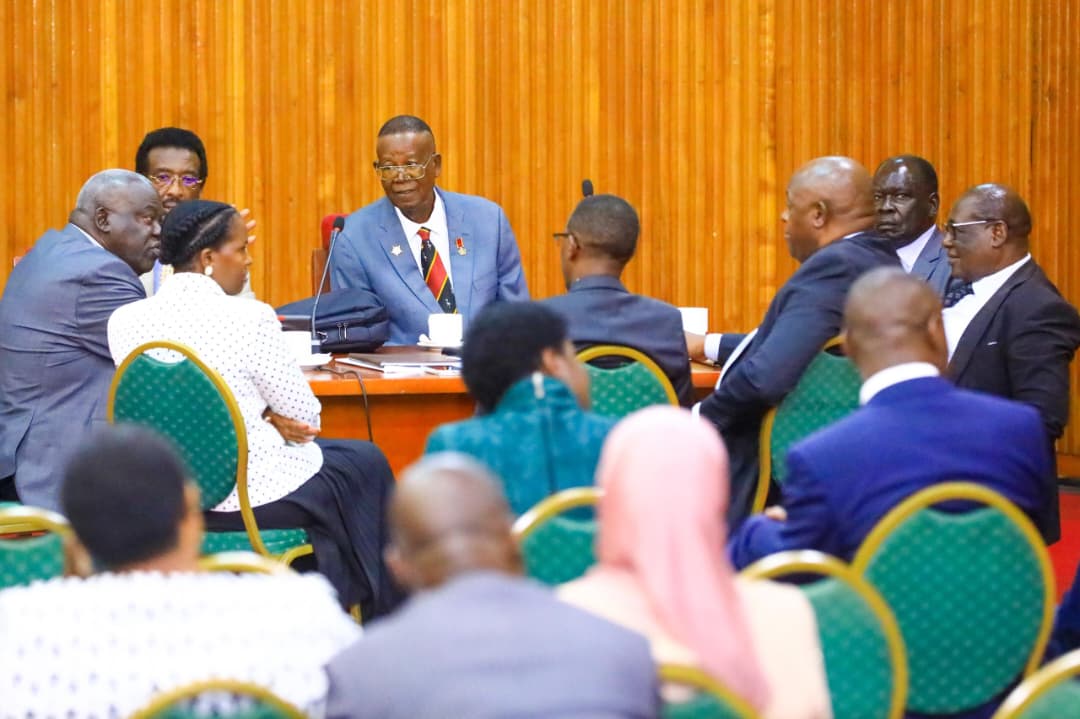

In June 2026, Dr. Lawrence Muganga walked into Parliament’s Appointments Committee as President Museveni’s nominee for State Minister for Internal Affairs. He was the Vice-Chancellor of Victoria University. He had a title, a profile, and a presidential endorsement behind him.
He did not walk out as a minister.
The committee, chaired by Speaker Jacob Oboth Oboth, rejected his appointment. The reason: Muganga held three citizenships, Ugandan, Rwandan, and Canadian, and could not provide convincing evidence that he had renounced the other two. Under Section 19D of the Uganda Citizenship and Immigration Control (Amendment) Act, 2009, dual and multiple citizens are barred from holding offices listed in the Fifth Schedule of the Constitution. That list includes cabinet ministers and ministers of state.
The rejection was a reminder of something many Ugandans do not fully know: becoming a minister in Uganda is not just about who the President chooses. The Constitution places a deliberate check on that power, and Parliament holds it.
What the Constitution Actually Requires
Under Articles 113 and 114 of the Constitution of Uganda, every ministerial appointment must clear two gates: The President’s nomination and Parliament’s approval. Neither alone is enough.
But before a person even gets to that point, they must first meet the qualifications required to be elected as a Member of Parliament. These qualifications are not optional. They are constitutional conditions, and if they are not satisfied, the appointment cannot stand.
Ugandan Citizenship
The person must be a Ugandan citizen. The Constitution recognises three routes to citizenship:
Citizenship by birth applies to anyone born in Uganda where at least one parent or grandparent belongs to an indigenous community that existed in Uganda as at 1st February 1926. A person born in Mbarara whose father belongs to the Bahima community, for instance, is a Ugandan citizen by birth and satisfies this condition.
Citizenship by registration is available to people who have legally lived and worked in Uganda for a considerable period and satisfy the conditions set by law. A Kenyan national who has lawfully resided in Uganda for many years and completes the registration process becomes a Ugandan citizen and, subject to meeting all other requirements, would be constitutionally eligible for public office.
Citizenship by naturalisation allows a foreign national to voluntarily acquire Ugandan citizenship after meeting requirements including lawful residence, good character, and integration into Ugandan society. A British citizen who has lived lawfully in Uganda for many years, complied with immigration laws, and been granted citizenship by naturalisation would similarly become eligible — again, subject to all other constitutional conditions.
But citizenship alone is not enough. Uganda’s Citizenship and Immigration Control Act goes further: it bars anyone holding dual or multiple citizenship from occupying sensitive state offices — including the presidency, prime minister, cabinet ministers, and ministers of state. This is the provision that caught Muganga. He held citizenship in three countries, and when the committee asked him to prove he had renounced the other two, he could not.
Voter Registration
The person must appear on the Electoral Commission’s national voters’ register as a registered voter.
Education
The Constitution sets a minimum educational qualification: a Uganda Advanced Certificate of Education (A-Level / Senior Six), or an equivalent recognised by the relevant authorities. Past vetting exercises have seen nominees rejected specifically over inadequate academic qualifications — a reminder that this requirement is actively enforced, not merely ceremonial.
Cabinet Ministers: Article 113
Cabinet Ministers are appointed by the President, but only after Parliament has approved the appointment. This is the constitutional sequence, and it cannot be reversed or bypassed.
The President has some flexibility in who he nominates. He can appoint a sitting Member of Parliament, or he can appoint someone who simply qualifies to be an MP without currently holding a seat. A respected economist, for example, can be appointed Minister of Finance without ever having contested an election as long as they satisfy the constitutional qualifications and survive parliamentary vetting. The same logic applies to academics, professionals, and civil society leaders. The President can look beyond Parliament. But the nominee still has to face it.
The Constitution caps the total number of Cabinet Ministers at 21, unless Parliament approves a higher figure. Each minister is assigned a specific portfolio by the President. The Minister of Health oversees public health, hospitals, and disease control; the Minister of Education drives education policy and oversight of institutions. A minister cannot hold another paid office likely to compromise the independence of their ministerial role. The Constitution is explicit: a minister cannot serve two masters where those interests conflict.
Ministers of State: Article 114
Beyond Cabinet Ministers, the President may also appoint Ministers of State who serve within ministries to support Cabinet Ministers and oversee specific sub-portfolios. A single ministry may have a Cabinet Minister and multiple Ministers of State, each responsible for a different area. The Ministry of Education, for example, may have a Cabinet Minister alongside separate Ministers of State specifically responsible for Higher Education, Primary Education, and Sports, each managing their own portfolio while reporting to the Cabinet Minister above them.
The same constitutional conditions apply. Parliament must approve Ministers of State. Their number should not exceed 21 unless Parliament decides otherwise. Where a Cabinet Minister is absent or incapacitated, the President may direct a Minister of State to step in and carry out the Cabinet Minister’s functions.
The Appointment Process, Step by Step
Step 1: The nominee must satisfy all constitutional qualifications, citizenship, voter registration, and educational requirements that apply to candidates for Parliament.
Step 2: The President nominates the person for appointment as a Minister.
Step 3: Parliament’s Appointments Committee conducts due diligence, verifies qualifications, examines integrity concerns, and vets the nominee. This is not a formality.
Step 4: The full committee votes. A nominee the committee is not satisfied with on citizenship, qualifications, integrity, or constitutional eligibility can be rejected, regardless of presidential endorsement.
Step 5: Upon parliamentary approval, the President formally appoints the minister.
Step 6: The minister takes the prescribed oath and assumes office.
When the System Works: The Muganga Case
The Muganga rejection in 2026 is a live illustration of each step in this process functioning as the Constitution intended.
President Museveni had the authority to nominate him. He exercised it. But the Appointments Committee conducting verification with the Ministry of Internal Affairs discovered evidence of multiple citizenship that Muganga could not satisfactorily address. A lawyer had already petitioned Parliament before the vetting began, citing Section 19D of the Citizenship Act. The committee considered the petition, carried out independent checks, and acted on what it found.
Muganga subsequently accused Deputy Speaker Thomas Tayebwa of bias and ethnic targeting in the process. Those are serious allegations that deserve their own scrutiny. But the constitutional mechanism the requirement that Parliament independently approves ministerial appointments — functioned. A presidential nominee was examined, found to fall short of the legal standard, and was not approved.
It is also not the first time. In 2021, former State House aide Alice Kaboyo was rejected after the committee cited her 2012 conviction in the GAVI corruption case. The Anti-Corruption Act bars convicts from serving in public office for ten years following conviction. Twenty committee members voted against her endorsement. The law held.
Why Does This Matter to Ordinary Ugandans?
The constitutional requirement for parliamentary approval is not a bureaucratic procedure. It is a structural safeguard, a deliberate mechanism to ensure that executive power over appointments does not go unchecked.
When the Appointments Committee asks a nominee hard questions, demands documents, and rejects those who do not qualify, it is doing exactly what the Constitution asks of it. When citizens petition Parliament with legal concerns about a nominee’s eligibility, as the lawyer did in Muganga’s case, they are exercising a right the system provides.
Understanding this process matters because it tells us something important: government offices in Uganda are not granted by presidential favour alone. They are constitutional responsibilities. The law sets the conditions. Parliament enforces them. And any Ugandan armed with knowledge of these provisions can hold both the executive and the legislature to account.